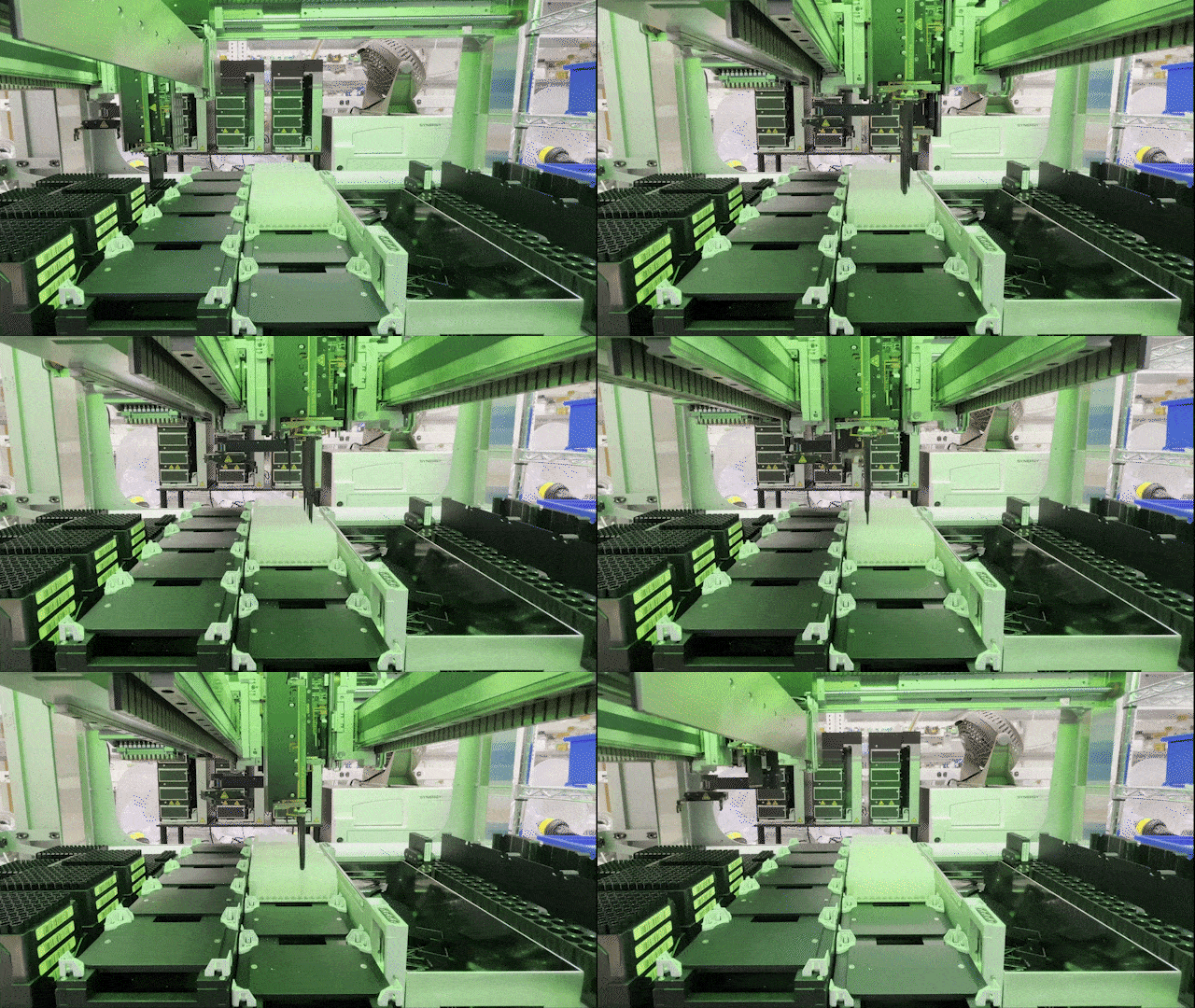
Developing Models to Study and Engineer the Microbial World in Our Guts
With two NIH awards totaling more than $5 million, Ophelia Venturelli will explore how the human gut can respond to internal and external influences
With the support of the NINDS Research Program Award, McIntyre will use patient-specific models to better understand how electrodes can record and stimulate the human brain
Previously unmapped sections of the genome explain how cells sense their mechanical environment and could open new paths for treating disease
Inhibiting a critical enzyme involved in iron regulation makes cancer cells vulnerable to cell death
The new approach allows researchers to identify and optimize material recipes to more effectively encapsulate difficult-to-deliver drugs
New approach uses bacterial genes to restore both strength and rhythm of damaged hearts.
Professor Dan Ma’s work with MR fingerprinting has to potential to transform how doctors detect and treat conditions like brain tumors and epilepsy.
By combining high-res imaging tools with light-absorbing nanostars, researchers can more precisely treat cancerous tumors
Increasing the presence of a naturally occurring molecule helps illuminate pathways for improving brain imaging and the efficiency of optogenetic tools
Cochlear implants, modern ultrasound, and head and neck safety are just a few of the impactful advances that have come out of Duke Engineering research.
Competitive, five-year grant will help John Hickey identify how and why cells in the same environment develop different characteristics
Funding from the HFSP will support Hickey and his collaborators investigate how different molecules direct cellular behavior