
AI and Robotics Accelerate Search for Better Gut Microbiome Therapies
New data-driven approach could enhance results for the quickly growing $130 billion probiotics and prebiotics industry.
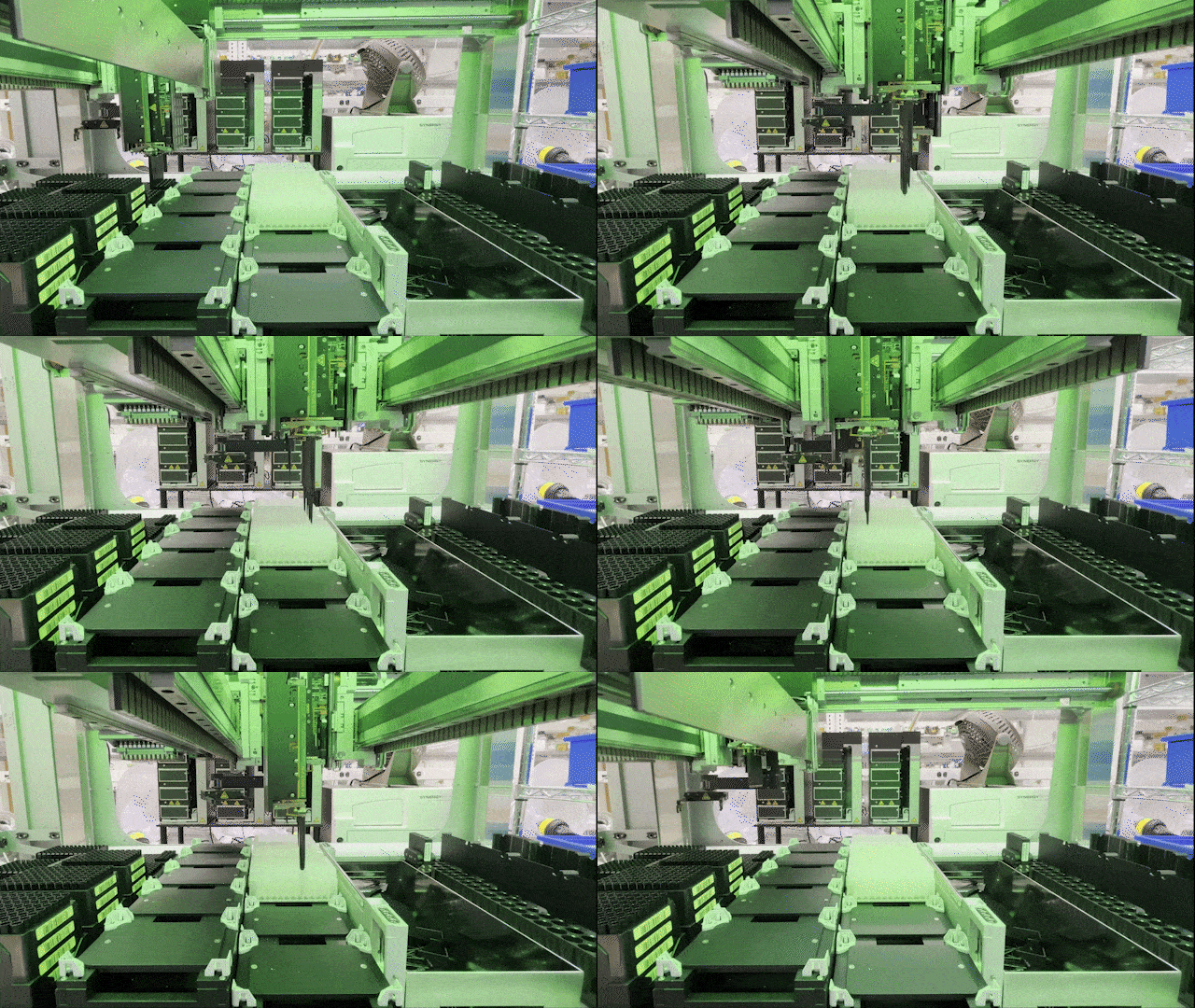
New data-driven approach could enhance results for the quickly growing $130 billion probiotics and prebiotics industry.

Every day, AI tools get more capable, and deployment is outpacing our understanding of what they get wrong. Duke Engineering Dean Jerry Lynch connects with three Duke University experts to break down where that gap is already showing up: in cybersecurity, in the everyday AI tools people use to get advice, and in healthcare.

Sharon Gerecht's laboratory has constructed an in vitro model to study the inner blood–retina barrier.

Using a database of over 140 million full body poses, Dunn aims to identify similar behaviors across different animal models of autism

Tatiana Segura's lab has developed an injectable biomaterial that helps transform the cavity left behind after a stroke caused by a blood clot into an environment more supportive of repair.

Delivered more than 24 hours after a stroke in mice, the biomaterial promoted vascular repair, neural remodeling and improved motor performance

A team of students in Duke's Data+ Program is spending the summer building virtual models to find out how the human body fights diseases in John Hickey's lab.

BME Professor Charlie Gersbach is one of several researchers worldwide interviewed for an article on using CRISPR to influence gene expression by editing the epigenome with the goal of treating disease.

Sharon Gerecht and her laboratory have used induced pluripotent stem cells (iPSCs) to grow specialized blood vessel cells critical to retinal health for the first time.

Duke researchers highlight the gaps in federal guidance governing validation of wearable devices

Critical cells that line retinal blood vessels grown from stem cells restore retinal function in mouse models and form retinal tissue in a lab for future disease studies.

By tracking the flow of cerebrospinal fluid, researchers gain an unprecedented view of the brain's glymphatic system
Jessilyn Dunn weighs in on what it takes for data gathered by wearables like blood pressure to be actionable in clinical settings as apps begin connecting users to physicians.