

Daylight Saving Time Fails to Boost Daily Steps, Study Finds
There’s no appreciable difference in people’s number of daily steps before and after a time change, according to Fitbit data drawn from 1,157 people in four U.S. states.
There’s no appreciable difference in people’s number of daily steps before and after a time change, according to Fitbit data drawn from 1,157 people in four U.S. states.
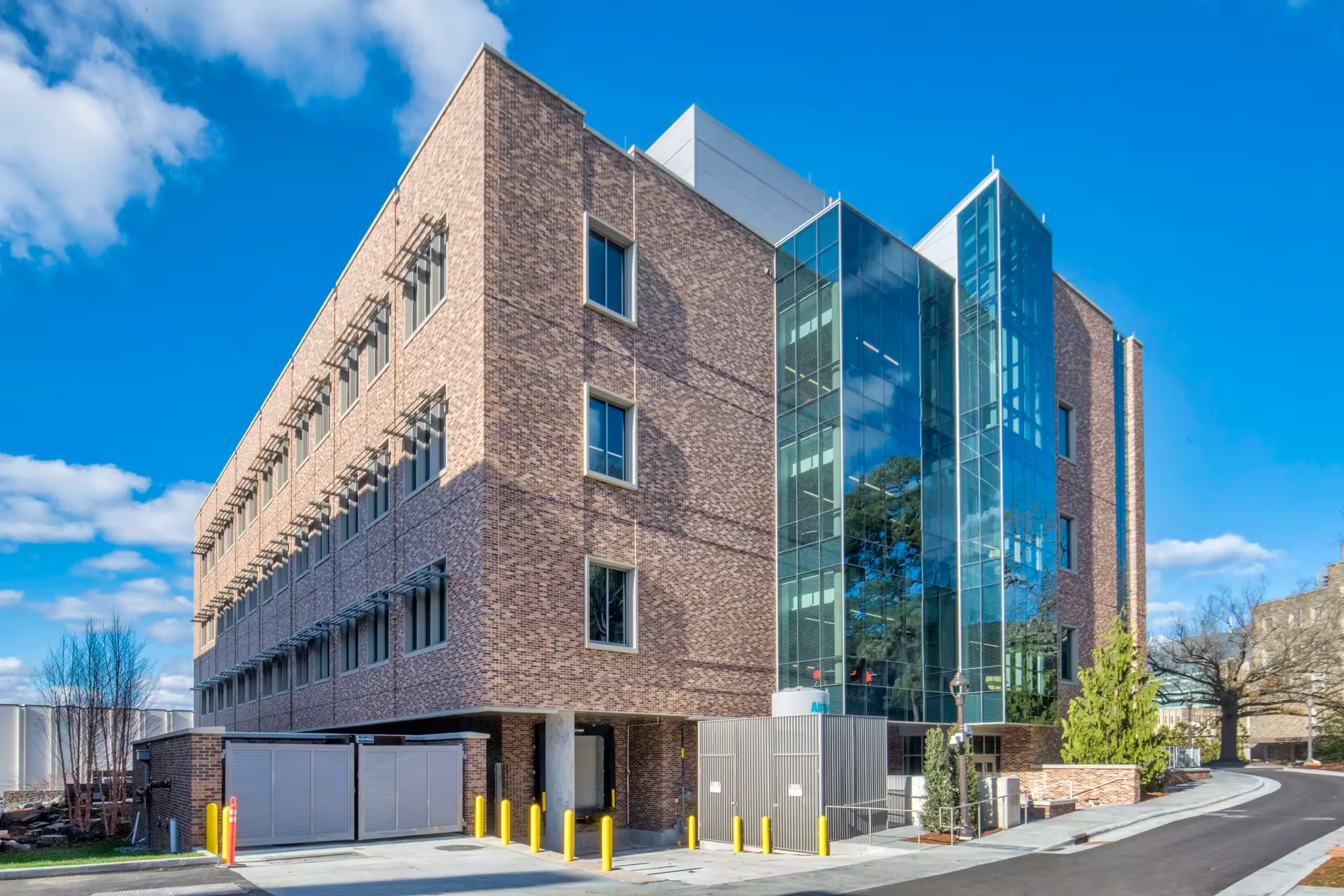
From 3D printed braces used by the NFL to a gel that can help regrow bones, all kinds of innovations are coming out of a Duke incubator called the BRiDGE.

Tuan Vo-Dinh is exploring a faster, less invasive way to detect and analyze head and neck cancers using light and AI.

Charles Gersbach and his colleagues are pursuing promising CRISPR technologies focused on controlling gene activity rather than permanently altering the genome.

The DukeREP program brings local high school students to campus for paid summer research experiences mentored by BME PhD students

Data from Fitbits show that changing time twice a year does not affect people’s overall step counts but does impact when they are getting their steps in.

BME's Jessilyn Dunn was among the faculty recognized for excellence in research and undergraduate teaching

The honor from the American Institute for Medical and Biological Engineering represents the top 2% of engineers in the field
Learn about the journey from academic researcher to entrepreneur and what it takes to launch a successful spin-out company, from Ashutosh Chilkoti, a serial founder

BME postdoctoral fellow Andrea Jones received a Germinator Award from the Duke Institute for Brain Sciences

Continuing a decade-long run of rising in national rankings, all of Duke Engineering’s graduate programs ranked in the top 25 by U.S. News & World Report for the first time.

Song is a biomedical engineering junior focused on developing innovative approaches to neural repair.